শদিয়া Sadiya
Born on 8 September 1926, near where the rivers that make the Brahmaputra come together. The eldest of ten children of Nilakanta Hazarika, a schoolteacher, and Shantipriya.
The station is already playing. Press to hear it from wherever the day has reached.
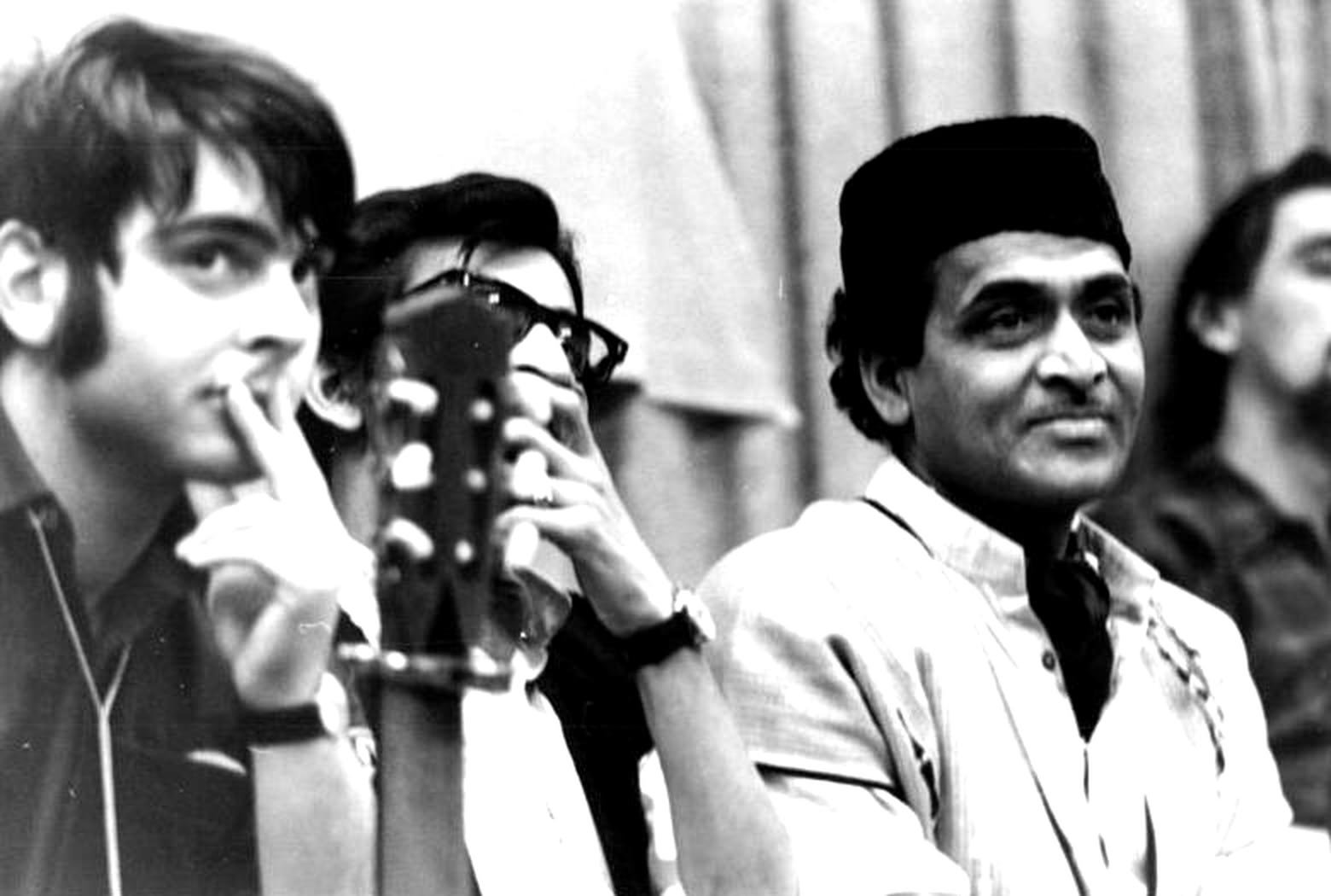
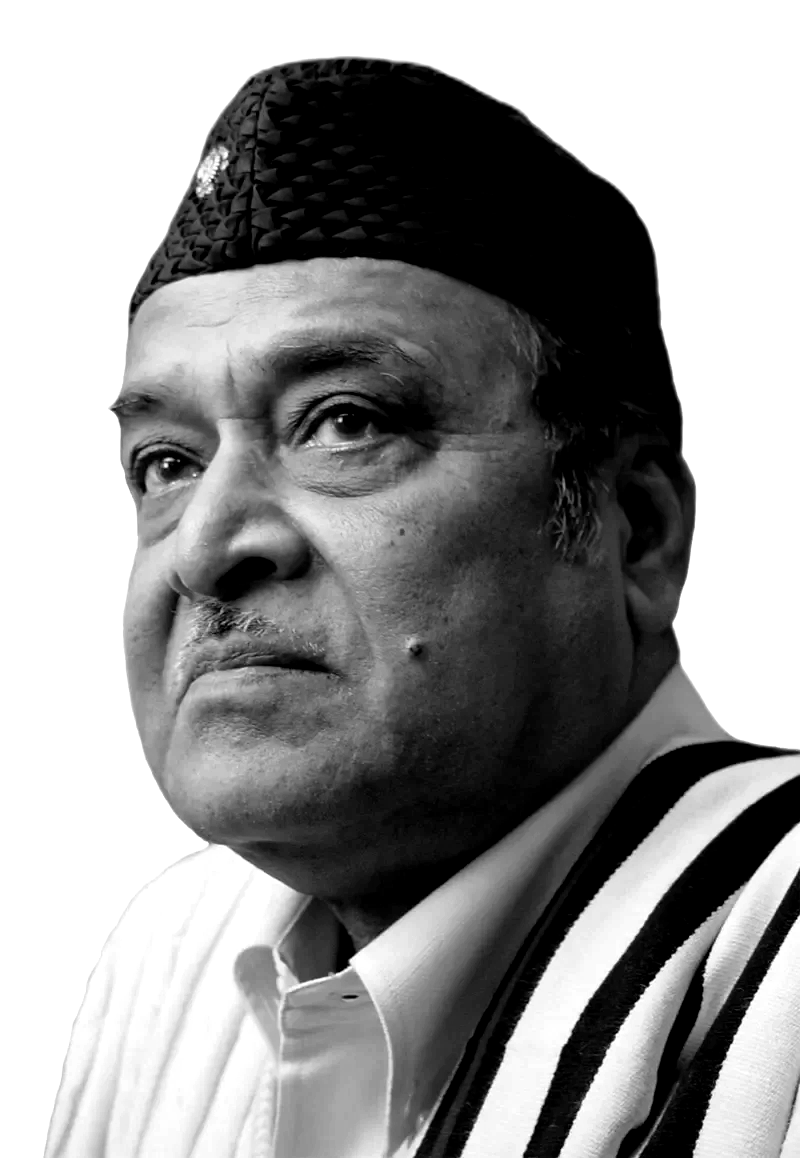
ড° ভূপেন হাজৰিকা
1926 – 2011Singer, poet, composer, filmmaker
If people will not care for one another, who will?
Born on 8 September 1926, near where the rivers that make the Brahmaputra come together. The eldest of ten children of Nilakanta Hazarika, a schoolteacher, and Shantipriya.
At about ten he was heard by Jyotiprasad Agarwala and Bishnu Prasad Rabha, who took him to Calcutta to make his first recordings. In 1939 he sang in Agarwala's film Indramalati.
On the Ganga at Banaras Hindu University: a BA in 1944, then an MA in political science in 1946. He worked briefly at All India Radio in Guwahati before a scholarship took him much further.
A doctorate at Teachers College, Columbia, on audio-visual methods in adult education. And Paul Robeson, who became his friend and showed him what a singer could do for society.
A first film as director in 1956. A National Film Award for the music of Chameli Memsaab, for 1975. And in 1993, Rudaali took an Assamese melody he'd written thirty years earlier to all of India.
He died in Mumbai on 5 November 2011, aged 85, and was brought home. On 9 November he was cremated with full state honours at Jalukbari.
Fig. 07Guwahati, November 2011
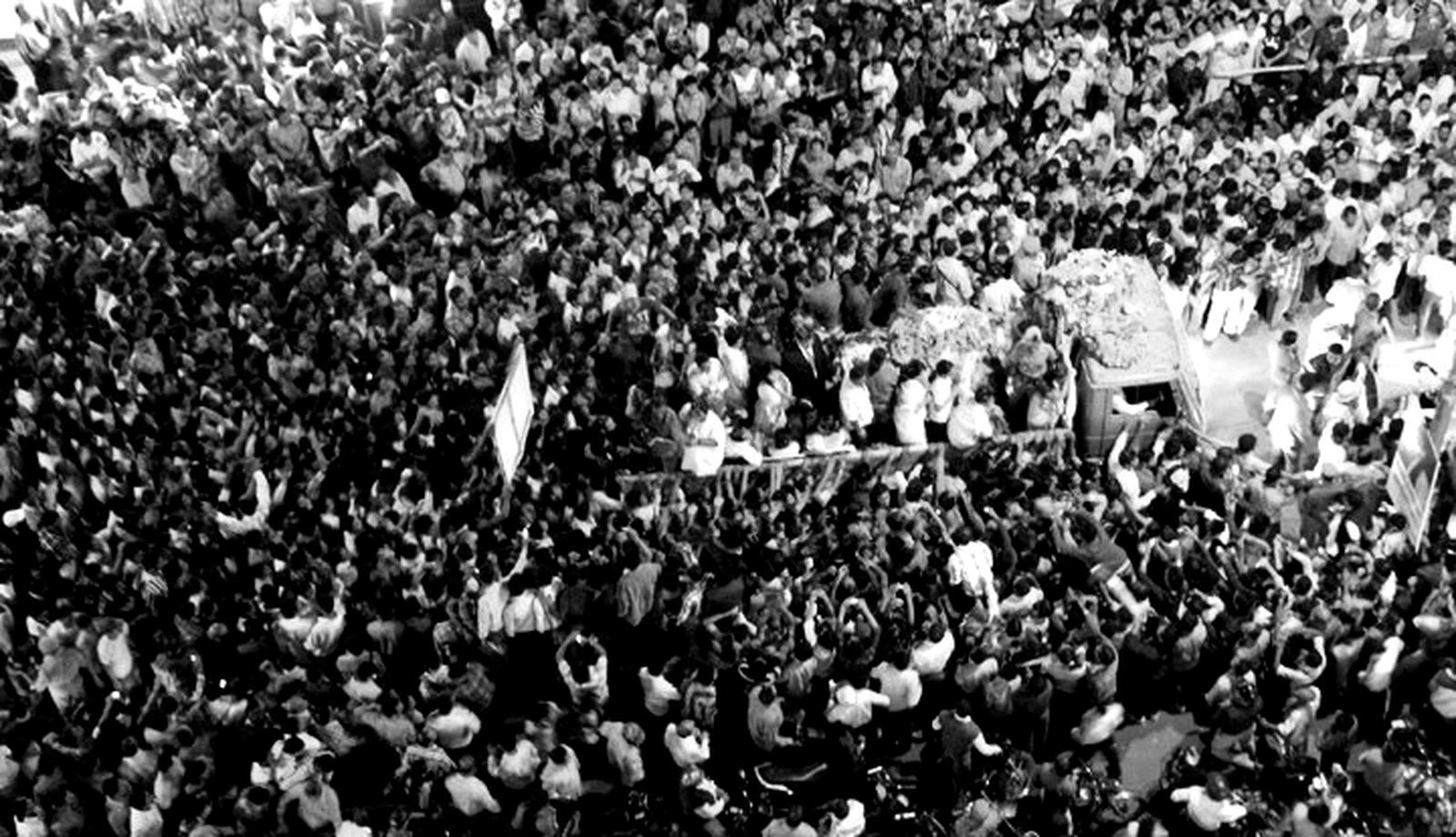
Nobody
counted them.
Guwahati, November 2011. Published estimates of those at the cremation run from tens of thousands to several hundred thousand.
One song, three rivers
River 01 / 03
"Ol' Man River", by Jerome Kern and Oscar Hammerstein II, from the 1927 musical Show Boat. Paul Robeson made it his own: a Black labourer watches a river that keeps rolling, untouched by what he suffers.
River 02 / 03
Not a translation. Hazarika took the melody and the idea and wrote something new. His singer turns to the Brahmaputra and asks how it can flow on so calmly past the suffering on its banks.
River 03 / 03
He carried the question across languages. In Bengali, in a version credited to him with Shibdas Banerjee on commercial listings, and in Hindi, with words credited to Pt. Narendra Sharma on the album Gangotsav.
On air now, on Assam's clock
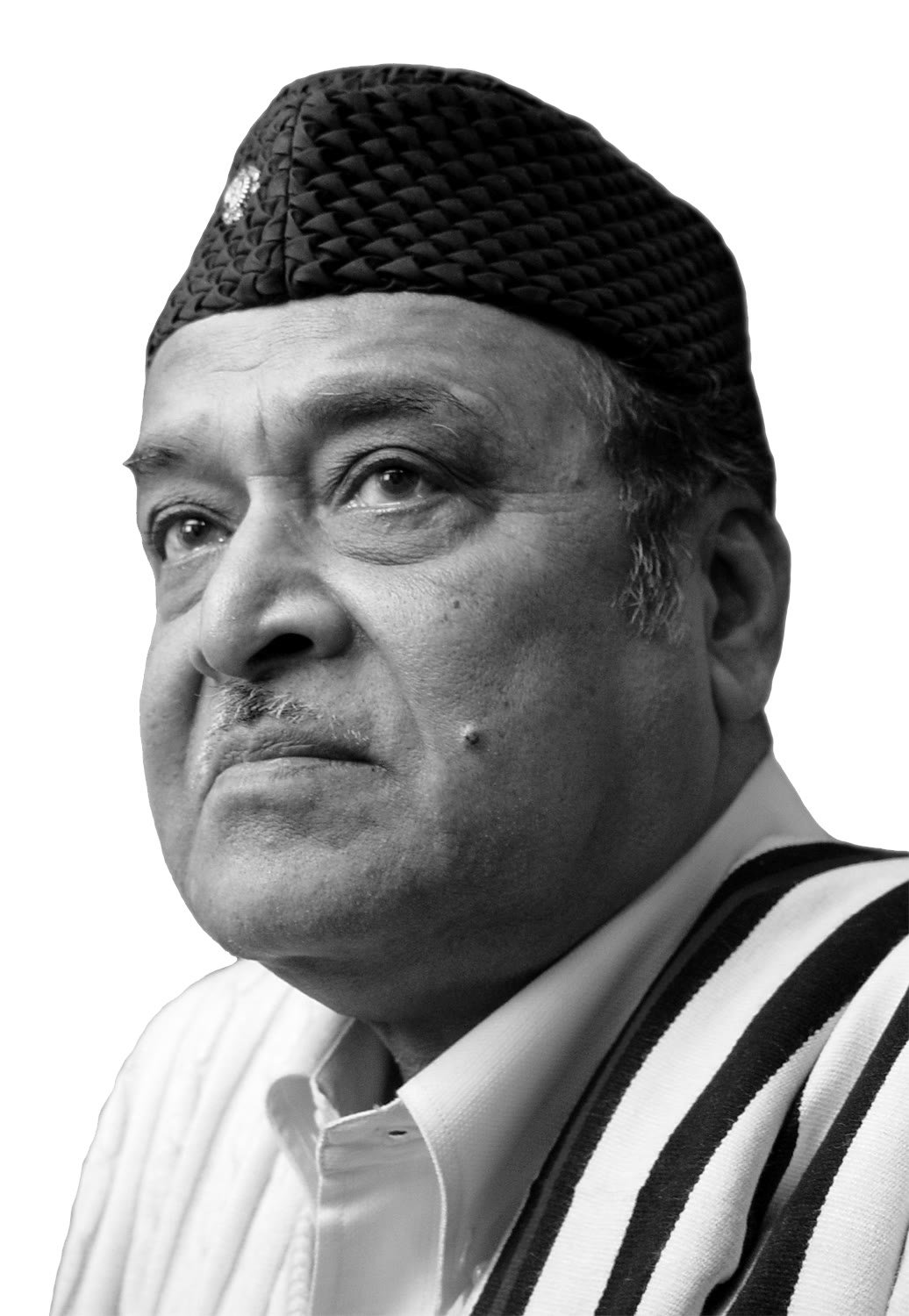
Assam calls him সুধাকণ্ঠ, the voice as sweet as nectar. The title is traditionally said to have been given by the poet Ananda Chandra Barua at Majuli in 1968. But he also wrote most of what he sang, composed the music, directed films and served in public life.
"Songs are a definite way for social change."As quoted in The Assam Tribune, 2021
He wasn't a singer who happened to care about society. He studied it. His Columbia thesis, dated 1952, argued for using every medium available to reach ordinary people. He wrote about boatmen, rickshaw drivers and third-class passengers. "Manuhe Manuhar Babe", from the early 1960s, asks who will care for people if people will not.
When India and China fought in 1962, he sang for the soldiers who died. During the language riots of 1960 he toured with Hemanga Biswas. In Bangladesh, a 2006 poll placed his Bengali "Manush Manusher Jonno" second only to the national anthem.
Those years weren't simple. He supported the early Assam Movement and was deeply disturbed by the violence that followed, including at Nellie in 1983. "Mahabahu Brahmaputra", dated 1980, praises the river as a meeting place of many peoples, at a time when that wasn't an easy thing to sing in Assam.
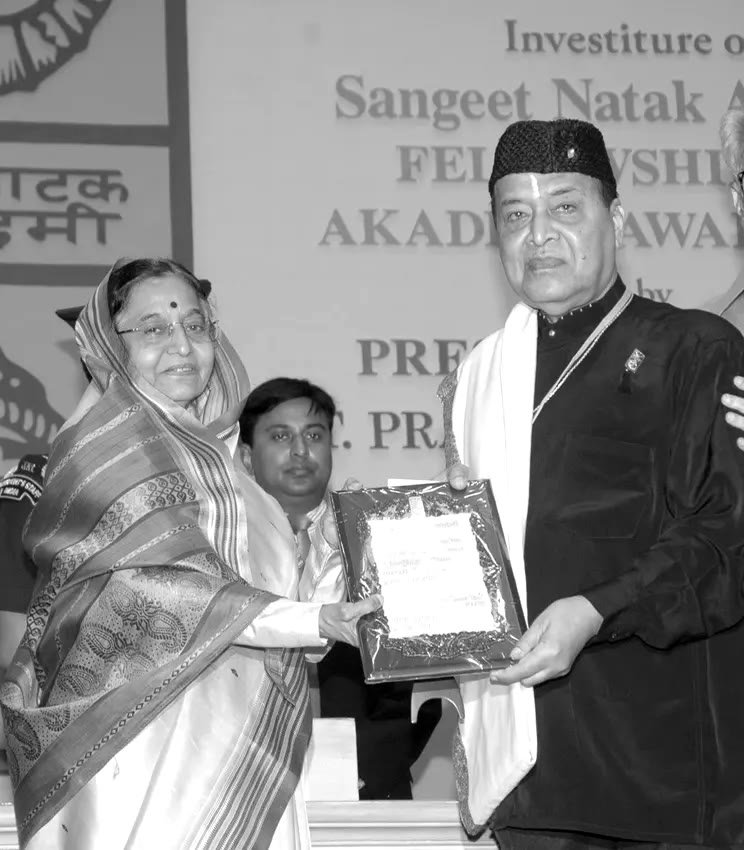
He directed Era Bator Sur (1956), then Shakuntala, Pratidhwani and Loti Ghoti, each awarded the President's Silver Medal for Best Assamese Feature Film. He became the composer behind Kalpana Lajmi's films, including Ek Pal, Rudaali, Darmiyaan and Daman, and wrote music for M. F. Husain's Gaja Gamini (2000).
He sat in the Assam Assembly as an independent member for Naoboicha from 1967 to 1972, was President of the Asam Sahitya Sabha at Sibsagar in 1993, and later chaired the Sangeet Natak Akademi. He stood unsuccessfully for Parliament from Guwahati in 2004.
In 2017 the new bridge at Sadiya, 9.15 km long, was named the Dr. Bhupen Hazarika Setu. His birth centenary opened in Assam on 8 September 2025, and a national closing is scheduled for 29 November 2026 at Bharat Mandapam, New Delhi.
সুধাকণ্ঠ